
Encumbrance Certificate: Why Every Property Buyer Should Check It
Buying a property is a major financial decision. Whether you are purchasing an open plot, land, house, apartment, or commercial property, checking the property’s previous registered transactions is an important part of due diligence.
An Encumbrance Certificate (EC) is a document related to registered transactions concerning a property for a specified period. In Telangana, the Registration & Stamps Department provides an online service for obtaining/checking EC information. The Government Services Portal describes the Telangana EC service as fully online.
Before buying property, an EC can help you identify registered transactions such as sales, mortgages and other registered dealings associated with the property.
What Is an Encumbrance Certificate?
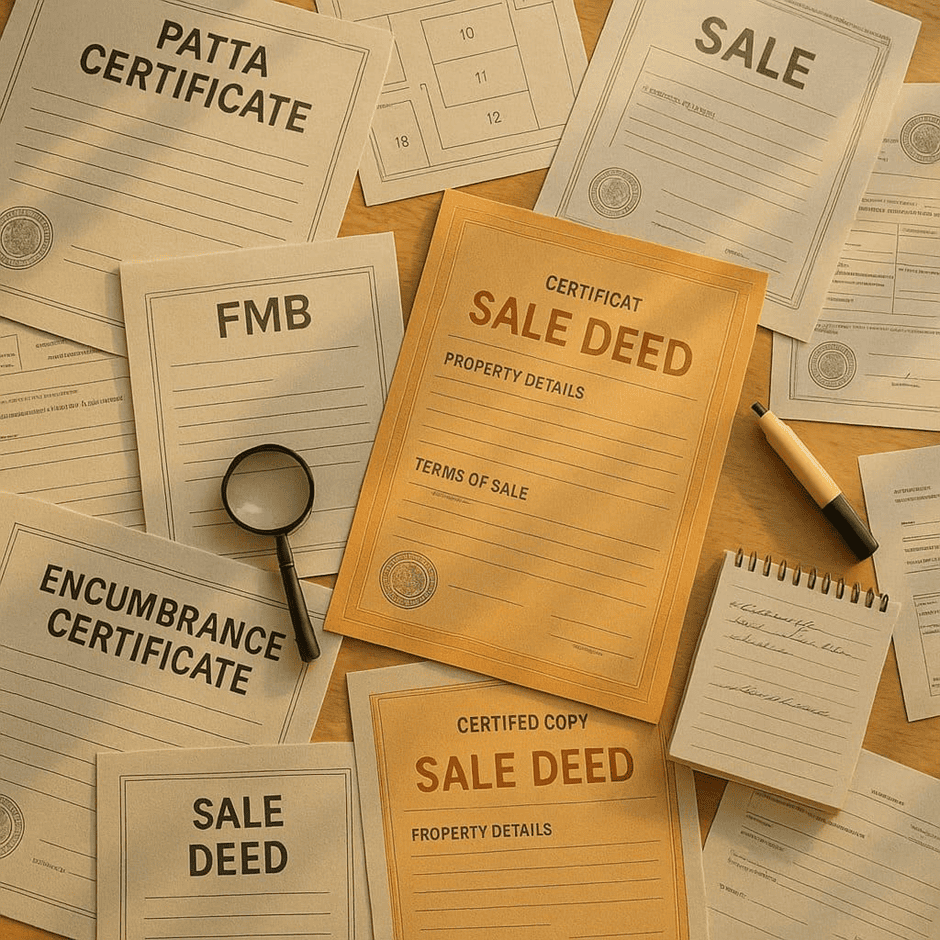
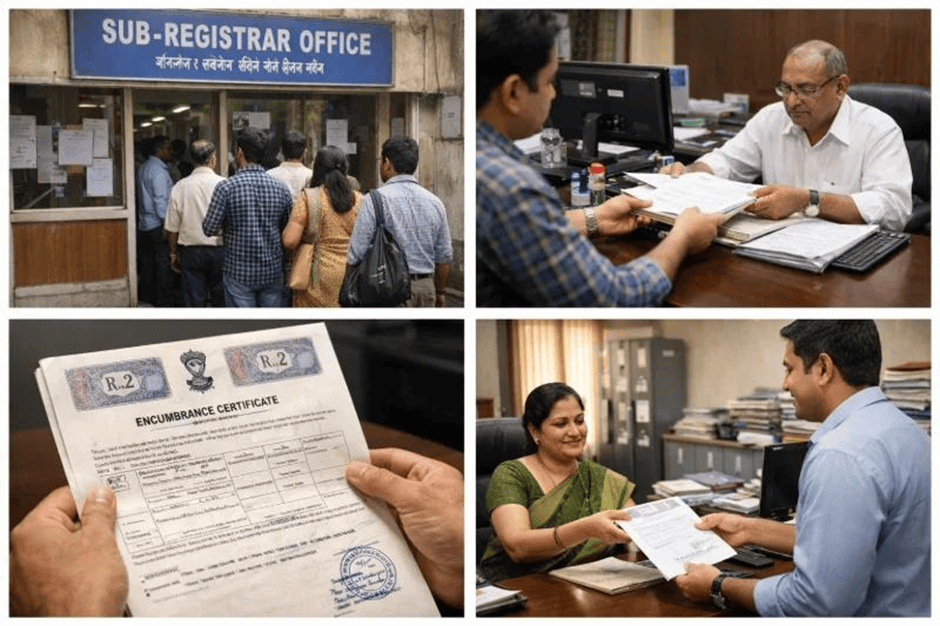
An Encumbrance Certificate (EC) is an official record showing registered transactions or encumbrances associated with a property during a particular period.
The term encumbrance generally refers to a claim, liability, or legal interest affecting a property. Depending on the records available, an EC may show transactions such as:
- Sale transactions
- Mortgages
- Gift deeds
- Release deeds
- Partition-related registrations
- Other registered property transactions
The Telangana government’s information on EC describes it as evidence concerning monetary and legal liabilities associated with the property.
A Nil Encumbrance Certificate generally means that no registered transactions/encumbrances were found for the property during the period searched.
However, a Nil EC should not be treated as proof that the property has absolutely no legal issues. Unregistered claims, certain court matters, boundary problems, or other issues may not appear in an EC. Therefore, buyers should use the EC as one part of complete property due diligence.
Why Is an Encumbrance Certificate Important?
- Helps Check Property Transaction History
An EC can help buyers understand the registered transaction history of a property for the selected period.
For example, if a plot was previously sold or mortgaged through a registered transaction, the relevant entry may appear in the EC.
- Helps Identify Registered Mortgages
A property may have been used as security for a loan. Registered mortgage-related transactions can be reflected in the EC.
This makes EC verification particularly important before purchasing property.
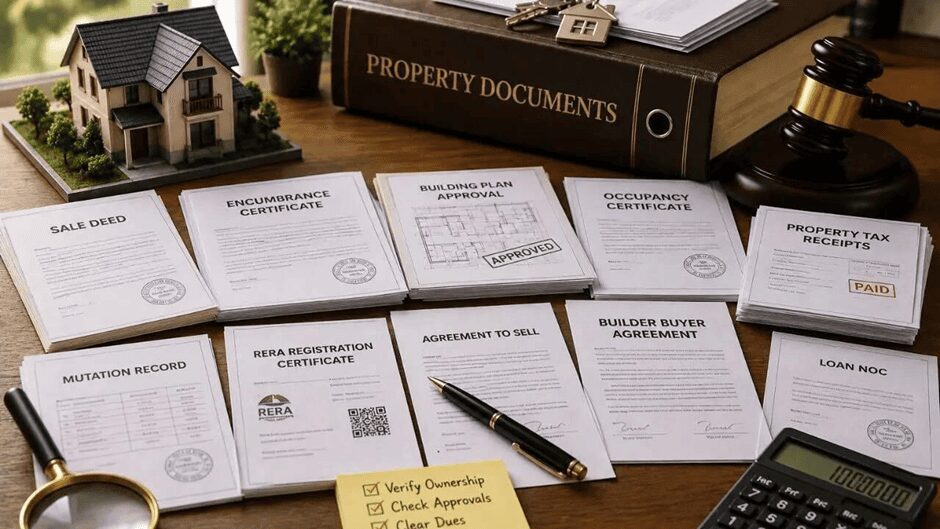
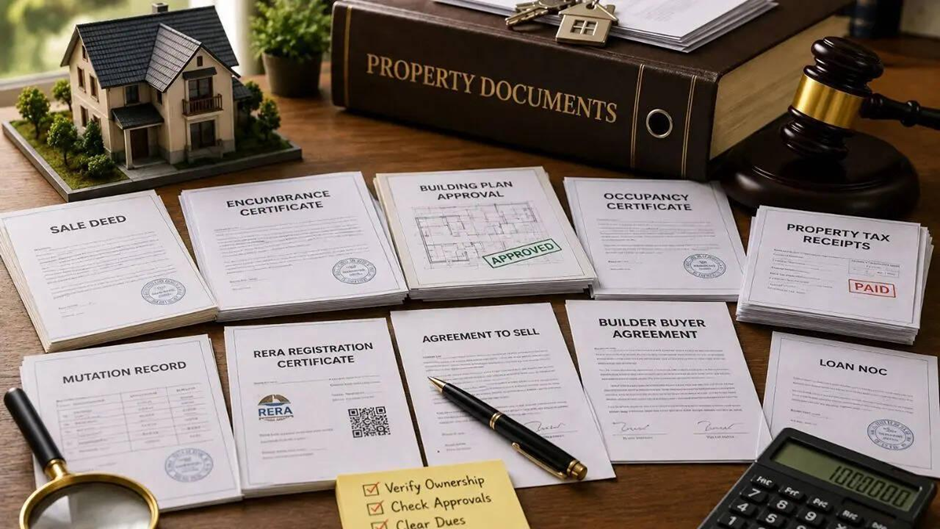
Before paying a substantial advance or completing a property purchase, buyers generally review multiple documents.
These may include:
- Sale deed
- Previous title documents
- Encumbrance Certificate
- Land/revenue records where applicable
- Approved layout documents
- RERA details, where applicable
- Property tax records
- Relevant permissions and NOCs
An EC is therefore an important part of the overall verification process.
- Useful During Home Loan Processing
Lenders may ask for property documents, including transaction and encumbrance records, when assessing a property for a loan.
The exact documentation requirements can vary between lenders and transactions.
Suppose an EC shows a previous mortgage or transaction.
Instead of proceeding without clarification, the buyer can ask the seller for supporting documents such as:
- Mortgage release documents
- Previous sale deed
- Release deed
- Cancellation document
- Other relevant registration records
This can help make the property verification process more systematic.
What Information Can You Find in an EC?
Depending on the record and certificate format, an EC may contain information such as:
- Property description
- Survey number or plot number
- Extent/area
- Village/locality
- Registration details
- Document number
- Transaction dates
- Nature of deed
- Market value/consideration information
- Names of parties involved in registered transactions
Telangana EC examples show property descriptions and registration/transaction information in the statement.
How to Get an Encumbrance Certificate Online in Telangana
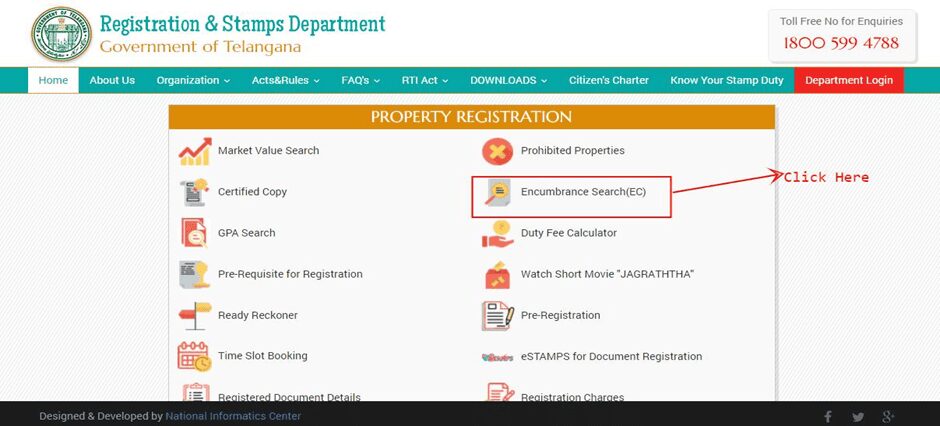
Telangana provides an online EC service through its Registration & Stamps Department. The Telangana State Portal also lists “Apply online for Encumbrance Certificate” among its state services.
Step 1: Visit the Official Telangana Registration Portal
Go to the Telangana Registration & Stamps Department’s official website:
Telangana Registration & Stamps Department
Use the official government portal rather than relying on unofficial websites for the actual application or verification process.
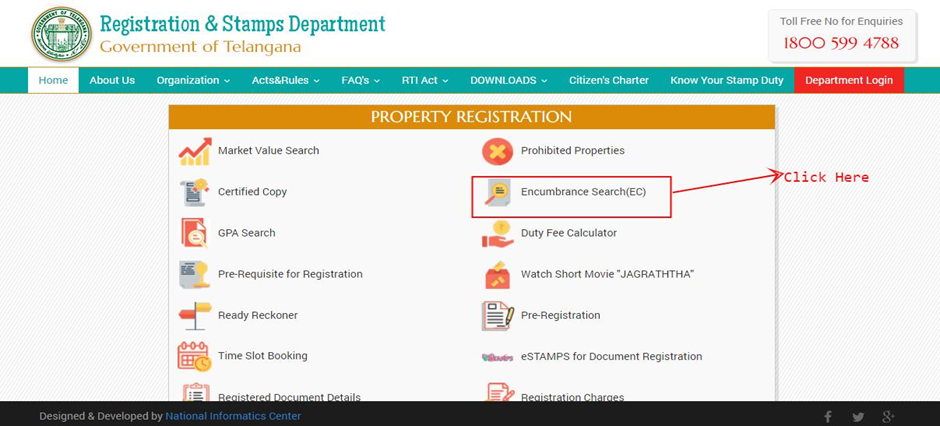
Step 2: Select the EC Service
Look for the Encumbrance Certificate / Encumbrance Search service under the available online services.
The exact interface or menu names can change as government portals are updated.
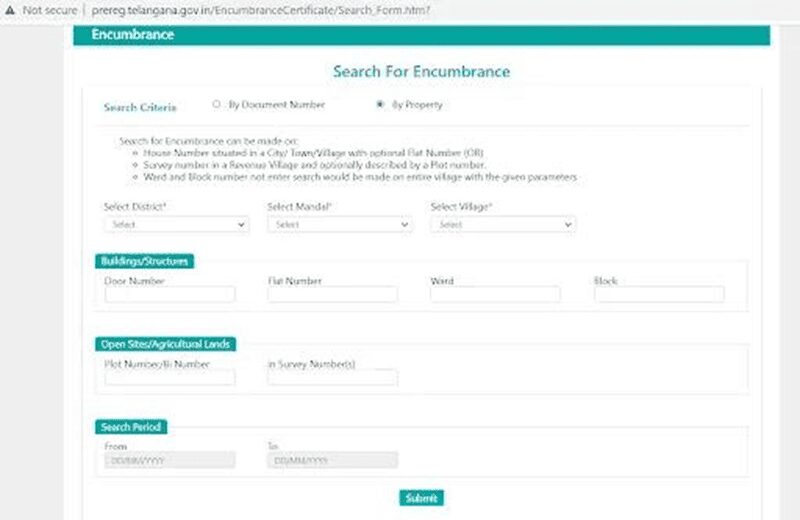
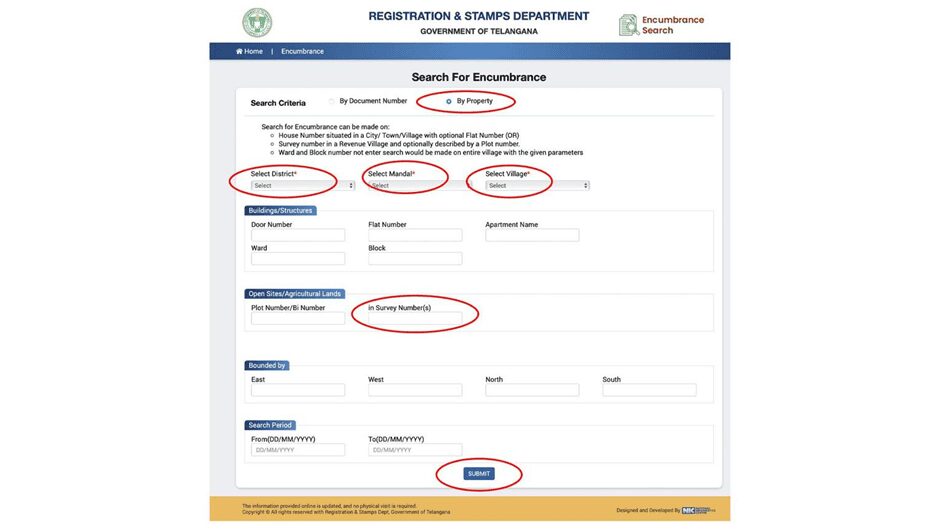
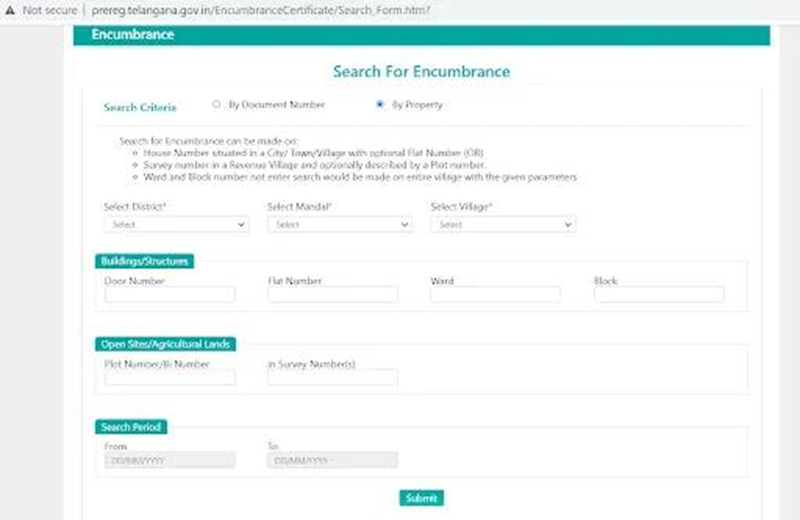
Step 3: Enter Property Details
Depending on the available search option, you may need information such as:
- District
- Sub-Registrar Office (SRO)
- Village/locality
- Property details
- Document number, where applicable
- Search period
Make sure the information matches the property documents.
Step 4: Select the Required Period
The EC is associated with a specific search period.
This is important because an EC covering only a short period may not reveal older registered transactions.
For property purchases, discuss the appropriate search period with a qualified property lawyer or the relevant registration authority based on the property’s history.
Step 5: Submit the Request and Pay Applicable Charges
Complete the required information and pay the applicable government charges, where required.
The Telangana government notes that the amount for EC services can vary depending on the selected period/service.

Step 6: View or Obtain the EC
After processing, the available EC information can be viewed or obtained through the applicable service.
For certain older or specific records, you may need to approach the relevant Sub-Registrar Office (SRO).
The National Government Services Portal also lists Telangana’s EC service as an online service.
Documents and Details You May Need
The exact requirements can vary depending on the service and property. It is useful to keep the following information available:
- Property/survey number
- Plot or house number
- Village/locality
- District
- Sub-Registrar Office
- Previous registered document number, if available
- Required search period
- Applicant details
Having the property’s previous sale deed or registration details can make the search easier.
How to Read an Encumbrance Certificate
When you receive an EC, don’t simply look for the words “Nil.”
Review the details carefully.
Check 1: Property Description
Verify:
- Survey number
- Plot number
- Area
- Village/locality
- Boundaries, where shown
The property details should correspond with the documents provided by the seller.
Check 2: Document Numbers
Look at the registered document numbers and dates mentioned in the EC.
Check 3: Nature of Transaction
Check whether the entry relates to a:
- Sale
- Mortgage
- Gift
- Release
- Partition
- Other registered transaction
Check 4: Names of Parties
Compare the names appearing in the EC with the seller’s documents and previous title documents.
Check 5: Search Period
Confirm that the EC covers the period you intended to verify.
EC Is Important, But It Is Not the Only Property Document
One common mistake among property buyers is assuming that a Nil EC automatically means the property is completely clear.
An EC primarily reflects relevant registered transactions within the searched period. It may not capture every possible issue affecting a property.
For example, an EC alone may not establish:
- Physical possession
- Correct property boundaries
- Validity of every historical title claim
- Unregistered transactions
- All pending litigation
- Zoning or planning permissions
- Whether construction approvals are valid
Therefore, buyers should combine EC verification with a broader title and property due-diligence process.
The Telangana Registration & Stamps Department explains that its records allow the public to verify registered documents and investigate rights, title and obligations relating to immovable property.
Common Mistakes to Avoid When Checking an EC
- Checking Only a Short Period
Older transactions may not appear if your search period does not cover them.
- Checking the Wrong Property Details
A small mistake in the survey number, plot number, village, or SRO can lead to incorrect or incomplete results.
- Treating Nil EC as Complete Legal Clearance
A Nil EC should not replace a complete legal title examination.
- Not Comparing the EC With the Sale Deed
Property details in the EC should be compared with the seller’s documents.
- Skipping Professional Verification
For high-value land or complicated title histories, consider having the documents examined by a qualified property lawyer.
EC vs Sale Deed: What’s the Difference?
| Document | Main Purpose |
| Encumbrance Certificate | Shows relevant registered transactions/encumbrances for a specified period |
| Sale Deed | Records the sale/transfer of property between parties |
| Title Documents | Help establish the chain of ownership |
| Property/Revenue Records | Provide applicable land or property-related records |
These documents serve different purposes and should not be treated as substitutes for one another.
Buyer Checklist Before Purchasing a Plot or Property
Before finalizing your purchase, consider checking:
✅ Encumbrance Certificate
✅ Sale deed and previous title documents
✅ Property ownership/title chain
✅ Survey and property boundaries
✅ Layout approval, where applicable
✅ RERA registration, where applicable
✅ Land/revenue records, where applicable
✅ Property tax records
✅ Relevant permissions and NOCs
✅ Legal opinion for important/high-value transactions
What is an Encumbrance Certificate?
An Encumbrance Certificate is a record of registered transactions or encumbrances associated with a property for a specified period.
Is a Nil EC enough to buy property?
No. A Nil EC is useful, but it should not be considered complete legal clearance. Buyers should conduct broader title and property verification.
Can I get an EC online in Telangana?
Yes. Telangana provides an online Encumbrance Certificate service through its Registration & Stamps Department.
What does an EC show?
An EC can show registered transactions such as sales, mortgages and other registered dealings connected with the property during the selected period.
How long should I check an EC?
The appropriate period depends on the property’s history and the purpose of verification. For an important purchase, consult a property lawyer about the appropriate title-search period rather than relying on a fixed number of years.
Does an EC prove ownership?
No. An EC should not be treated as a standalone ownership certificate. Ownership and title should be verified using the complete chain of relevant documents and records.
Final Thoughts
An Encumbrance Certificate is an important document for anyone planning to purchase land, plots, houses, apartments, or other property. It provides useful information about registered transactions connected with a property during a specified period.
For buyers in Telangana, the online EC service makes it easier to access registration-related information. However, EC verification should be part of a complete property due-diligence process—not the only check before purchasing.
If you are planning to buy a plot or property, take time to verify the documents, compare the property details carefully, and seek professional legal advice when necessary.
Looking for property opportunities?
Explore verified property options withVBVR PROJECT and make your property search more informed.
CTA: Explore Properties | Talk to Our Property Experts | Contact VBVR PROJECT Realty Today
https://whatsapp.com/channel/0029Va9Y6wu7z4kjj2rMqE2g